
UNDERGRADUATE STUDENT PROJECTS
Christian Arthur: “An Existential Crisis in 3 Parts” (Video Essay)
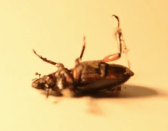
This video essay involves an audio script spoken over footage of an animal that some people consider gross. The subject matter regards psychological phenomena and existentialism.
 Nahalia Carless: “The Millennial Existential Crisis” (Blog)
This project explores the ways digital natives and immigrants are alike — how they help to define who a millennial is, how we are portrayed, and the wider implications of these titles. The goal of this project is to highlight that digital natives and immigrants have more in common than many are willing to admit and that the stereotypical perceptions are nothing but stereotypes.
Kelly Clover: “Double Life” (Video Essay) 
“Double Life” was created for an Advanced Nonfiction Workshop class in which we used visual media as we wrote an essay describing something that had importance to us. I chose something that has been with me since childhood. This essay is about the author’s childhood memories of moving to a new place, making new friends, and how a video game helped ease that transition.
 Welina Farah: “The Significance of Scripts” (Audio Short Story)
The narrator of this piece works through two aspects of her life: a wedding photography business with her romantic partner and her mother’s disapproval. Throughout the piece, the author and the listener both discover what it is that these aspects have in common.
Christopher Harris: “A Curious Old Back Hall” (Audio Essay) 
Centered around memories of cigarettes and smokers, this project explores the creation of narrative through sounds and silence. Scents and sights produce strong memories, and while they themselves don’t translate to the ear, the sounds associated with them do; this “syn-aesthetic” essay aims to cross the wires between scent and sound, and aurally evoke within the listener those same feelings of memory and nostalgia brought on by scent. AUDIENCE CHOICE AWARD WINNER!

Meiqi Li: “From the Outsider to the Insider” (Blog)
“From the Outsider to the Insider” describes the author’s experience of middle school and the life changes that came with it. Through her time as an ‘outsider’ without any friends, she finds the inner strength to overcome challenges and to be a better friend herself.

Kelly O’Donnell: “How Long Do Leftovers Last?” (Audio Essay)
This audio essay explores the author’s status as a “faux-adult” through narrative, music, and effects. It recounts an experiment in cooking which exposes her immaturity and the feelings she has surrounding it. This project is a tool in coming to terms with the struggle into adulthood.
 Ekelemchi Okemgbo: “Retrospective” (Digital Poetry Chapbook)
This experimental chapbook describes the author’s experiences surrounding a trip to the College Unions Poetry Slam Invitational. Annotations make the reading experience interactive, and it experiments with the possibilities of digital compositions.
KC Skelton: “Catholic Mass-chusetts” (Video Essay)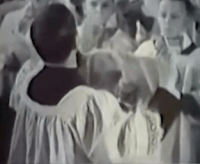
This video essay creates a visual metaphor between the Boston T and Catholic mass, while recounting a personal experience on the T that is disrupted by a stranger turned friend. The goal of the project is to foster a sense of connection that is possible between strangers.

Olivia Taylor: “Volunteering: Make a Difference in Your Corner of the World” (Website)
This website is dedicated to inspiring the spirit of volunteerism and informing the public about the benefits and importance of volunteering. It helps people find a way to volunteer that’s right for them and provides resources for bringing service learning to schools, for encouraging corporate social responsibility and pro-bono volunteerism in the workplace, and for nonprofits who want to expand and maintain a solid volunteer base.

Michela West: “All Grown Up 16” (Digital Photography)
This collection of senior portraits shows viewers how the photographer and other graduating students are ready to take on the world. This project reflects on how quickly time passes and all the changes that occur between first grade and the last year of college.
GRADUATE STUDENT PROJECTS
 Lauren Jo Alicandro: “Smoke and Mirrors” (Video Essay)
This project reflects on my experience working at a TV studio in a retirement community. This atypical juxtaposition of elders and technology is discussed through concepts of TV production to consider the meaning of performance, authenticity and limiting stereotypes. Motifs of mirrors, smoke and magic ask the viewer to reflect on what misconceptions or deceptions are created by making assumptions based on the visual surface. Can you trust your eyes?
Timothy Connors: “Patrick” (Audio Essay)
“Patrick” explores my relationship with my autistic brother. It focuses primarily on his inability to speak and how I and my family come to terms with the difficulties resulting from this gap in communication. The project combines interactions between me and my brother; an interview with my mother; and my own reflections about our sibling relationship.
 Jessica Covert: “Cities of Gold” (Video Essay)
This video essay is inspired by multiple literary genres: the road movie, the travel journal, and the lyric essay. It functions as a meditative travelogue about an American road trip, or the desire to leave home and the need to find a new one, and aims to loosen the classic conceptions the travel narrative with the aid of visual and aural modes. It’s about how place triggers memory or presents possibility in the face of fate, or other factors out of our own control.
 Theresa Dietrich: “Circular Story” (Video Essay)
This video essay explores the ways that people fall into particular patterns with one another and the ways in which these patterns shape their understanding of the relationship as well as how they act within it. The piece follows a circular argument between a couple which vacillates between hostility and forgiveness as the speaker turns her thoughts over and over in her mind through a journey home on the subway. Found footage accompanies the narrative.
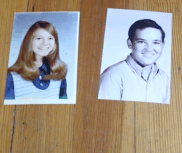 Rachel Meter: “WhenISleepI” (Video Essay)
This video essay explores the frailty and fallibility of marriage alongside the influences of family and slumbering selves. On one level, it seeks to explore a fragment of the influences that feed into a marriage and how the seemingly stable can be easily ruptured. On a broader plane, the video essay seeks to harness the capabilities of visual texts to complement and extend the audible text.
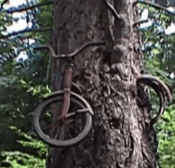 Tyler Murphy: “Vashon Island” (Audio Essay)
This exploratory video essay explores different ways growth occurs and what factors play a role. It is interested in how human growth and development can continue through obstruction or invasive elements. By juxtaposing images, music, and language, the project aims to explore different conceptions of growth — both natural and artificial (and whether there is a difference).
 Abby Thibodeau: “Dear Messed Up” (Video Essay)
This project examines the interplay between perfectionism and anxiety and attempts to recreate some of the somatic symptoms of anxiety by pairing images of aerial stunts and skeletons with a narrative that centers around seeking advice. AUDIENCE CHOICE AWARD WINNER!
FACULTY PROJECTS
 Erin Anderson, Assistant Professor:
“Her Husband’s Wife’s Pancreas” (Animated Audio Collage)
“Her Husband’s Wife’s Pancreas” is a work of multimedia nonfiction, which tells the story of my grandparents’ fifty-year relationship–as neighbors, as friends, and as husband and wife. I designed this piece in Flash using archival images and audio cut from oral history interviews, as a ‘conversation between my grandparents’ following their deaths.
 Matthew Davis, Assistant Professor: “Ways of Knowing & Doing in Digital Rhetoric” (Video)
These videos are one piece of a larger project emerging out of audio-video interviews with 25 researchers and teachers in digital rhetoric and digital humanities. These scholars were asked 10 questions about their work, and here you see two videos incorporating selections of their answers to four of those questions:
- how do you define digital rhetoric?
- how does digital rhetoric differ from the digital humanities?
- what makes one a digital rhetorician?; and
- what text or scholar do you assign your students in digital rhetoric?
“Ways of Knowing & Doing in Digital Rhetoric: The Blooper Reel”
Daniel C. Remein, Assistant Professor: “Ballad of Killian and Katko” (Audio Composition)
I had written a poem about a friend of mine, the poet Kevin Killian, who had blogged a few years back about how he had tracked down an elusive young poet by the name of Justin Katko at the Orono Poetics conference and, “struck by his beauty,” had snapped a photo (which he posted to his blog). Kevin later wrote a poem about all this in his book _Tweaky Village_, which won the Wonder Prize (Wonder Press, NY, 2014). I wrote a poem about all this, sent it Kevin, who then sent me back an updated (and more scruffy photo) of Mr. Katko taken a few years later. My poem was about all of this. However, it was titled “ballad of Killian and Katko”–and this is really the whole thing–another friend of mine called me out on calling the thing the “ballad” and not singing it. So the project lies at this weird intersection of blog, private correspondence, a written ballad/poem, and a digital audio composition that sings the ballad. The audio was produced with decidedly amateur and very low-tech digital recording apparatus of my home mac’s built-mic and garage band software. The Sensation Feelings journal, edited by connie mae oliver in Brooklyn, published the audio take.
 umbprofwriting.com
You must be logged in to post a comment.