
UNDERGRADUATE STUDENT PROJECTS
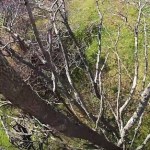 This is a video about climbing trees. I grew up climbing trees in my backyard, and I ended up writing my college entrance essay about climbing trees. I liked the essay so much, that I decided to simplify it a bit and use that as the audio to accompany a video of me climbing the tree that I grew up climbing. The video is pretty simple, but it complements the speaking audio.

Harris Heron: “Digital Literacy” (Video Essay)
This video essay is a narrative that explores my memories of playing massively multiplayer online role playing games (MMORPGs) and how it inadvertently became a learning experience towards becoming digitally literate.
 Faith Kimberly Lima: “Infinitely Fine” (Photo Essay)
This photo essay depicts the daily routine of a college student with chronic pain. Young sufferers with invisible illnesses are often left in the in-betweens; they are not ‘sick’, but are not ‘well’ either. To communicate the discomfort of liminal states, the subject’s experience is framed through a stoic lens. Instead of dwelling on the pain, she explores other facets of her identity, besides ‘patient’ – musician, writer, daughter, quipster, and scholar. Her repossession of self serves as her fuel to continue. RUNNER-UP AUDIENCE CHOICE!
Natalia Mirabito: “Noxious Nomophobia” (Photo Essay) 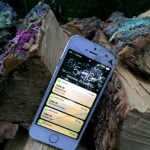
“Noxious Nomophobia” conveys the psychological effects of social media usage. Clinical studies heed warnings of the psychiatric disorder Nomophobia – the fear of no mobile phone. This photo essay depicts a technologically-plagued world that nature overpowers, representing a contagious naturalistic climate and reminding us of our nature-infused world.
 Jennifer Moore: “Tinder Poetry” (Social Media Poetry)
I started this Instagram project because of April being National Poetry Writing Month. This is my own take on Tinder, and I thought this would be a fun way for people to discover that Tinder is not that bad. It’s a creative medium to express yourself to other people.
Natalia Mirabito: “Loneliness Gone Viral” (Sonic Argument) 
If you’ve always had a hunch that social media and cell phone usage perpetuates cycles of loneliness, social anxiety and unfulfilling social interactions—you are, indeed, correct. I composed this work of ‘music’ by juxtaposing familiar sounds of the outdoors with jarring, raw, digitized notification sounds. The piece builds instrumentally crafted digital sounds of our everyday lives, leading the listener on a multi-modal sonic experience in which there is intense build up of two forces (nature vs. technology) battling against each other.
Endre Joseph: “OscarsSoWhite” (Vlog) 
My project is a five minute vlog about the optimism of a white Boston film critic for the 2017 Oscars Ceremony following the #OscarsSoWhite controversy.

Faith Kimberly Lima: “Acetaminophen Etude” (Sonic Argument)
This five-minute sonic argument expresses the power of music to induce audio analgesia – physical and emotional pain relief facilitated by white noise or melody, sans pharmacological agents. The subject, a musician, student, and chronic pain patient, uses sounds from her every-day life to convey the muted, isolated nature of chronic illness. Ultimately, “Acetaminophen Etude” orchestrates how chronic pain patients can harness attunement from discord, reaching ‘fine-ness’ through haphazard harmonization.

Sabina Lindsey: “Brothers” (Video Story)
The story explores the close relationship I have with my two older cousins Paul and John Pat, and how over the years our bond has been stronger than that of my estranged brother from my father’s side. Being a good older brother is about presence, love, and dedication to always protecting their younger sibling. That’s what makes a real brother. AUDIENCE CHOICE WINNER!
GRADUATE STUDENT PROJECTS
 Nicholas Trefonides: “Geo-poetica; CoPo; e-Accessibility” (Blog)
My blog is a venue for engaging with the UMass Boston community and conceptualizing ways of making science, poetry, and electronic media more accessible. There are three sections: Geo-poetica is a collective translation of scientific articles in Nature; Cooperative Poem (CoPo) seeks to develop a website and mobile application for co-authoring that makes the process of creating a collection of poetry much more efficient through a combination of poetic minds using algorithms to generate coherent and cohesive poems; e-Accessibility is the quality of electronic media that allows it to be reached by as many people as possible.
Erin Shimala: “Walden” (Webtext)
Walden can be a challenging text for students because of Thoreau’s vocabulary and references. This hypertext version of Walden aids comprehension by linking parts of the text to clarifying information such as dictionaries, maps, videos, and Wikipedia pages. In addition to making the text more accessible and interactive, this project also increases students’ digital literacy by requiring them to hyperlink a portion of the text. This explicitly shows students the intertextuality of web-based texts while increasing their comprehension.
 Shana Berger: “When The Emperor Was Divine” (Webtext)
This website offers a tool for scaffolding my teaching of the historical novel When The Emperor Was Divine by Julie Otsuka. The novel takes place during the Japanese-American internment, and Otsuka leaves out background information about the internment, assuming her readers are familiar with this history. Hypermedia offers a method for students to succinctly and deeply engage both with historical information about the internment and connections between the internment and current and historical moments. AUDIENCE CHOICE WINNER!
FACULTY PROJECTS
Lillian-Yvonne Bertram, Assistant Prof. of Creative Writing:
“The Poem is a Body Behind You” (Virtual Poetry)
Using a virtual platform, Bertram creates a spatial environment of poetry that highlights the physical presence and materiality of the words. The poem interacts and envelopes the reader/viewer; it surrounds the reader, who is directed to keep searching for the poem – ever moving, ever present, and tangibly felt. Please, view this project on the ipad in the Digital Studio.
 Matthew Davis, Assistant Prof. of English: “Ways of Knowing & Doing in Digital Rhetoric” (Webtext & Video)
This web text and accompanied videos ask scholars how they think about and teach digital rhetoric. The video compiles interviews with 25 researchers and teachers in digital rhetoric and digital humanities. These scholars were asked 10 questions about their work, including:
- how do you define digital rhetoric?
- how does digital rhetoric differ from the digital humanities?
- what makes one a digital rhetorician?; and
- what text or scholar do you assign your students in digital rhetoric?
“Ways of Knowing & Doing in Digital Rhetoric: The Blooper Reel”
Alex Mueller, Associate Prof. of English: 
“EmpowOA Twitter Chat” (Twitter Chat)
A Twitter chat with Alex Mueller (@muellerale) on the topic of the Open Access Companion to the Canterbury Tales (OACCT) and ‘going rogue’ in Open Access.
 umbprofwriting.com
You must be logged in to post a comment.